How a $2.4M Restaurant Taught Me the Difference Between Revenue and Reality
And why closing 404 Sports Bar & Grill to make room for a new Mexican concept is not the end of the story — it is the next business lesson.
In our first year, 404 Sports Bar & Grill did about $2.4 million in sales.
That number sounds good when you say it out loud.
It sounds like success.
It sounds like proof.
It sounds like one of those numbers people use in a bio, a pitch deck, or a social media post when they want everybody to know they are doing something serious.
And to be clear, it was serious.
We built something real. We opened the doors. We served people. We created jobs. We gave folks a place to celebrate birthdays, watch games, eat, drink, laugh, dance, meet up, and feel like something was happening in the building.
But after running a restaurant that produced that kind of volume, I learned one lesson that every entrepreneur needs to hear:
Revenue is not reality.
Revenue is loud. Revenue gets attention. Revenue gives people something to clap for. But profit is quieter. Cash flow is colder. Operations are less emotional. And the bills do not care how impressive your sales number sounds.
In five days, we are closing 404 Sports Bar & Grill as it currently exists. The space will become a Mexican concept.
That sentence is not easy to write, but it is honest.
And if there is one thing running a restaurant taught me, it is this:
The business always tells the truth.
The question is whether the owner is humble enough to listen before the lesson gets more expensive.
This article is not a pity party. It is not a funeral. It is not an apology. This is a business lesson. It is the kind of lesson you only get when you have payroll due, invoices stacked up, staff depending on you, customers judging you, vendors calling you, landlords watching you, systems failing you, and your own pride trying to convince you that more effort will fix what really needs a new model.
I thought I opened a restaurant. What I really opened was a university. The tuition was expensive.
We Built Something Real
Before I talk about closing, I want to give 404 Sports Bar & Grill the respect it deserves. Because changing something does not mean it never mattered. Closing a concept does not erase what was built. A pivot does not mean the previous version was fake.
404 Sports Bar & Grill was real. It was not just an idea on paper. It was not just a logo. It was not just a dream I talked about but never executed. It was a real business, in a real building, with real customers, real employees, real bills, real wins, real problems, and real pressure.
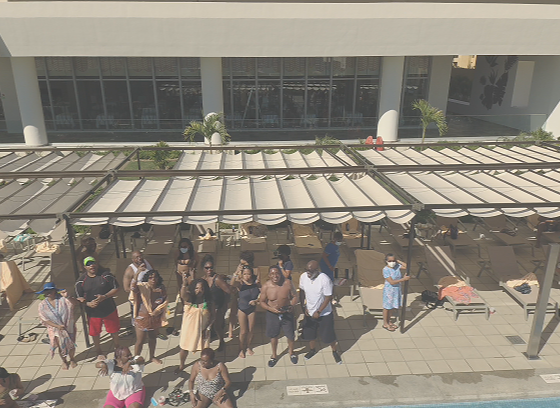
We did real sales. We served real people. We created real memories. We brought energy into a space that needed energy. We hosted birthdays, brunches, sports nights, events, date nights, meetups, and those random nights where people just wanted somewhere to go where the food was good, the drinks were flowing, and the room felt alive.
There were nights when the building felt exactly like what I imagined when we started. People laughing. Music playing. Servers moving. The bar full. The kitchen pushing tickets. The TVs on. The energy up. That is a beautiful thing to see when you are the owner.
So this is not about pretending it failed from the beginning. It did not. It worked in a lot of ways. But one of the hardest lessons in business is learning that something can work and still not work well enough.
Something can generate sales and still drain you. Something can be loved by customers and still be financially heavy. Something can be busy and still be unstable. Something can be real and still require a reset. That is the part entrepreneurs do not talk about enough.
Revenue Makes Noise, But Profit Tells the Truth
A restaurant doing $2.4 million in sales sounds like the owner should be walking around carefree. That is what people think from the outside. They see cars in the parking lot. They see people at the bar. They see drinks on tables. They see a crowd. They see social media posts. They see events. They hear a revenue number. Then they assume the owner is eating good.
But let me tell you what a lot of business owners already know: Everybody gets paid before the owner.
The landlord gets paid. The food vendor gets paid. The liquor vendor gets paid. The beer vendor gets paid. The insurance company gets paid. The payroll company gets paid. The government gets paid. The utility company gets paid. The repair technician gets paid. The marketing platforms get paid. The software companies get paid. The delivery apps get their cut. The credit card processor gets their cut. The customer expects the experience they paid for. The staff expects their check.
Then, after all of that, the owner gets whatever is left. If anything is left.
That is the difference between revenue and reality. Revenue is the money that comes in. Reality is what survives after the business gets attacked from every direction.
The danger of high revenue is that it can seduce you. It can make you believe the business is healthier than it is. It can make you delay hard decisions because the top line still looks respectable. But the bank account tells a different story. The margins tell a different story. The unpaid vendor balance tells a different story. The owner’s stress level tells a different story.
That is why I say revenue is not reality. Revenue is the headline. Profit is the paragraph you better read carefully.
The Restaurant Business Is a Math Problem Wearing an Apron
A lot of people get into restaurants because they love food, people, culture, nightlife, hospitality, or the idea of owning a place where everybody knows their name. But a restaurant is not just food and vibes. A restaurant is math. It is a math problem wearing an apron.
Every plate has math in it. Every drink has math in it. Every schedule has math in it. Every comp has math in it. Every late employee has math in it. Every over-poured cocktail has math in it. Every item sitting too long in the walk-in cooler has math in it. Every mistake has math in it.
When the math works, the business breathes. When the math does not work, the owner starts using hope as a financial strategy. And hope is not a system. Hope does not fix food cost. Hope does not lower rent. Hope does not make payroll. Hope does not train staff. Hope does not control liquor. Hope does not simplify a bloated menu. Hope does not make customers come back. Hope does not create accountability. Hope feels good for a minute, but math comes back with receipts.
One of the biggest lessons I learned is that you can love the restaurant business and still respect how unforgiving it is. The restaurant does not care that you worked hard. The restaurant does not care that you meant well. The restaurant only responds to the numbers, the systems, the people, and the execution. That is humbling. And if you do not let it humble you early, it will humble you later with interest.
Food Cost Will Humble Any Owner With an Ego
The menu is where a lot of restaurant dreams get expensive. When you are building a concept, it is easy to think like a customer. You want the menu to be exciting. You want premium items. You want variety. You want people to open it and say, “Oh, they have everything.”
But the walk-in cooler has a different opinion. The invoices have a different opinion. The waste log has a different opinion. The prep team has a different opinion. The cash flow has a different opinion.
Premium items create premium pressure. If a steak sits too long, that is money. If seafood is over-ordered, that is money. If portions are inconsistent, that is money. If cooks are not trained correctly, that is money. If the menu is too wide and inventory is too complicated, that is money.
At some point, I had to face a hard truth: A menu is not just a list of food. A menu is a financial strategy. Every item needs a job. Some items drive profit. Some items drive traffic. Some items create identity. Some items support bar sales. Some items are there because the owner likes them, and that is dangerous.
A good menu is not the menu with the most expensive ingredients. A good menu is not the menu with the most options. A good menu is one the customer wants, the kitchen can execute, the staff can sell, and the business can afford.
That is one of the reasons the Mexican concept makes sense. Mexican food can be flavorful, exciting, family-friendly, bar-friendly, and profitable when built correctly. The food cost structure has a better chance of matching the business reality.
Liquor Looks Like Profit Until You Lose Control of It
On paper, liquor seems like one of the best parts of the restaurant business. You buy a bottle. You pour drinks. You make margin. Simple, right? Not exactly. Liquor will lie to you if you let it.
It looks like cash sitting on the shelf. But without control, it becomes heavy pours, free drinks, missed rings, comps, theft, mistakes, bad habits, and “I don’t know what happened” conversations. A bottle can disappear slowly. One extra ounce at a time. One friend hookup at a time. One unrecorded drink at a time.
If it is not measured, it is not managed. If it is not rung in, it is not revenue. If it is not counted, it is just a rumor.
The same applies beyond liquor. Anything valuable in your business needs a system around it. Cash needs a system. Inventory needs a system. Labor needs a system. If the business depends on people doing the right thing without visibility, you are not running a system. You are running a wish. And wishes do not reconcile inventory.
Labor Is Not Just an Expense — Labor Is the Operating System
People talk about labor like it is just a line item. It is not. Labor is the operating system of a restaurant.
A restaurant does not run because you have a logo, a menu, and a lease. It runs because somebody opens the door. Somebody preps the food. Somebody cleans the kitchen. Somebody seats the guest. Somebody takes the order. Somebody cooks the meal. Somebody pours the drink. Somebody runs the food. Somebody notices the table has been waiting too long. Somebody fixes the mistake. Somebody closes correctly.
The restaurant business taught me that talent is not enough. I have seen talented people who were unreliable. I have seen loyal people who needed stronger training. I have seen charismatic people who were not accountable. I have seen people who were great when watched and different when not watched.
Payroll is not just money going out. Payroll is the culture you are financing. That means every person on the schedule is either helping protect the business or helping weaken it. There is no neutral.
Good people need structure so they can win. Weak people need structure so they cannot hide. New people need structure so they can learn. Managers need structure so they can be measured. Owners need structure so they are not forced to manage everything by memory and emotion.
Marketing Can Fill the Room, But Operations Keep the Money
This lesson hit me hard because I understand marketing. I know how to create attention. I know how to build campaigns. I know how to promote events. I know how to get people to click, call, reserve, show up, and spend.
But the restaurant taught me this: Marketing can fill the room. Operations keep the money.
A strong campaign can create demand, but it cannot save a broken shift. An ad can get a customer in the door, but it cannot cook the food correctly. A text message can bring back a birthday party, but it cannot make the server attentive. A DJ can create energy, but he cannot make the bathroom clean. An influencer can bring attention, but attention becomes dangerous when the experience is inconsistent.
A restaurant with weak operations should be careful with strong marketing. Because marketing does not hide problems. It exposes them faster.
Do not invite more people into a broken experience. Fix the experience. Then pour gas on it.
Marketing is not the business. Marketing is the amplifier. If the operation is strong, marketing amplifies strength. If the operation is weak, marketing amplifies weakness. That applies to restaurants, smoke shops, service businesses, online courses, agencies, and almost everything else.
Attention is not the win. Conversion is not even the whole win. Fulfillment is the win. Can you deliver what you sold? Can you do it consistently? Can you do it profitably? Can you do it without the owner having to suffer every day? That is the real test.
The Owner Cannot Be the Whole System
For a while, owners can cover weaknesses with effort. You can work longer. You can answer more calls. You can fix more problems. You can jump behind the bar. You can run food. You can calm down a customer.
But eventually, the question becomes: Is the business working, or is the owner just absorbing the dysfunction?
That is a hard question. Because a lot of entrepreneurs take pride in being able to carry weight. We brag about being built for pressure. We tell ourselves we can handle it. We say things like, “I will just push through.” But sometimes pushing through becomes a trap.
If the whole business only works when the owner is physically, mentally, emotionally, and financially overextended, that is not a healthy business. That is a hostage situation with a business license.
The owner cannot be the whole system. The owner cannot be the only alarm bell. The owner cannot be the only checklist. The owner cannot be the only person who cares about the numbers.
If the business only works when I am suffering, the model is broken. That line took me some time to accept. Because when you are an owner, you can confuse responsibility with self-sacrifice.
Responsibility does not mean doing everything yourself. Responsibility means building the structure that makes the right things happen consistently. That is what I am taking into the next version. More systems. More visibility. More accountability. More simplicity. More math. Less ego. Less chaos.
Customers Forgive Problems Faster Than They Forgive Indifference
A restaurant will never be perfect. Food will come out late. An order will get entered wrong. A drink will take too long. But customers do not always leave because something went wrong. They leave because nobody seemed to care.
A late order can be saved by communication. A wrong item can be saved by ownership. A frustrated guest can be saved by a manager who actually listens. A bad moment can become a loyal customer story if the recovery is handled correctly.
Hospitality is not just smiling when everything is easy. Hospitality is awareness under pressure. It is noticing. It is caring. It is moving. It is communicating. It is making the customer feel like they are not invisible.
Customers forgive problems faster than they forgive indifference. That is a leadership lesson. Not just a restaurant lesson. People can deal with imperfection. They have a harder time dealing with being ignored.
The Lease Does Not Care About Your Feelings
Every business owner with a physical location needs to understand this: A lease is a machine. It keeps running. It does not care if sales were down. It does not care if the fryer broke. It does not care if your best manager quit. It keeps running.
When you are excited about opening a business, it is easy to focus on the dream of the space. You imagine the design. The customers. The music. The menu. But the lease is where the dream becomes obligation. And obligation does not care about your excitement.
Do not fall in love with a space until you understand the math attached to it. The space can be beautiful and still dangerous. The location can be strong and still expensive. The lease is not just paperwork. The lease is part of the business model.
Closing Is Not Always Quitting
We are closing 404 Sports Bar & Grill in five days. There is no way to write that sentence without feeling the weight of it. When you build something, it becomes part of you.
So yes, closing a concept is emotional. But closing is not always quitting. Sometimes closing is wisdom. Sometimes closing is discipline. Sometimes closing is the only way to protect the opportunity from the weight of the current model.
We are not closing because nothing happened. We are closing because enough happened for us to know what needs to change. The market gave feedback. The numbers gave feedback. The operations gave feedback. The labor model gave feedback. The food cost gave feedback. And when all the feedback points in the same direction, the owner has a choice: ignore it and keep bleeding, or listen and reset. The reset is the move.
Why a Mexican Concept Makes Sense
The next concept has to do more than look different. It has to operate better. That is the point.
A Mexican concept makes sense for several reasons. First, it can be more family-friendly — working for lunch, dinner, birthdays, families, date nights, casual gatherings, and celebrations. It does not have to depend only on late-night energy or sports-driven traffic.
Second, the food cost structure can be smarter. Rice, beans, tortillas, chicken, pork, steak used strategically, sauces, salsas, queso, vegetables, chips — these ingredients create a wide variety of dishes without requiring the inventory chaos of a broad sports bar menu.
Third, the bar program still has room to work. Margaritas, tequila, mezcal, beer, cocktails, happy hour, flights, pitchers — the bar becomes part of the experience, not separate from it.
Fourth, the concept can create stronger repeat behavior. Lunch specials. Taco Tuesdays. Family platters. Birthday dinners. After-work margaritas. Catering trays. The model has flexibility.
Fifth, it can be more operationally focused. A tighter menu. Cleaner prep. Better kitchen rhythm. More predictable ingredients. A clearer customer promise. That is what the next version needs. Not just paint. Not just a different sign. A better operating thesis.
What I Would Do Differently From Day One
Looking back, there are things I would do differently. That is not regret. That is tuition turning into wisdom.
- Simplify the menu earlier and make sure every item had a financial reason to exist
- Track food cost weekly, not just when cash got tight
- Monitor liquor variance from the beginning
- Treat inventory like cash, because that is what it is
- Build manager accountability around numbers, not opinions
- Document every role: opening duties, closing duties, prep duties, service standards, recovery steps
- Build the customer database from opening week — names, emails, phone numbers, birthdays, preferences
- Separate hype from profitable marketing and make every promotion prove itself by the numbers
- Watch labor as a percentage, not just as a schedule
- Hire slower and hold people accountable sooner
- Be more careful about letting the business become dependent on my personal energy
- Negotiate leases with more downside protection
- Use AI and automation earlier — dashboards, daily and weekly scorecards
- Not confuse being busy with being healthy
- Not confuse community love with business stability
A community can love your business and still not understand what it costs to keep it alive. Customers can enjoy the experience and still not see the pressure behind it. Love matters. But math decides survival.
What the Restaurant Taught Me About Leadership
Running 404 Sports Bar & Grill taught me more about leadership than any book could have. Leadership is easy to talk about when nothing is on fire. It is different when payroll is due. It is different when vendors are calling. It is different when a manager disappoints you. It is different when the bank account is tight.
Leadership is not being loud. Leadership is not having the title. Leadership is not pretending everything is fine. Leadership is not making every decision from pride. Leadership is the ability to tell the truth while staying useful.
Because owners have emotions too. Owners get tired. Owners get disappointed. Owners get embarrassed. Owners get frustrated. Owners get scared. But the owner is usually the last person allowed to panic, even when they have the most reasons to.
That is why systems matter. The more a business depends on the owner’s emotional strength, the more fragile it is. Leadership has to become structure. Structure is how you protect the business from mood swings, emergencies, confusion, and burnout.
A strong leader does not just inspire people. A strong leader builds the system that makes performance repeatable. Motivation is not enough. Charisma is not enough. Vision is not enough. A good idea is not enough. The numbers matter. The model matters. The people matter. The process matters. The accountability matters. The cash flow matters.
Leadership is knowing when to stop defending the old plan and start building the better one.
The Business Always Tells the Truth
This may be the biggest lesson of all. The business always tells the truth. Not immediately. Not always loudly. But eventually.
The truth shows up in the numbers. It shows up in food cost. It shows up in labor. It shows up in reviews. It shows up in employee turnover. It shows up in vendor balances. It shows up in customer complaints. It shows up in the owner’s stress. It shows up in whether the business can survive without constant rescue.
You can ignore the truth for a while. You can explain it away. You can blame the economy, the staff, the customers, the vendors, the landlord. Sometimes those things are real factors. But even when they are real, the business is still telling you something.
The danger is not that the business tells the truth. The danger is that the owner argues with it. I have argued with it before. Most entrepreneurs have. We argue because we are attached. We argue because we already spent the money. We argue because our name is on it. We argue because people are watching.
But sometimes the defeat is not in changing. Sometimes the defeat is refusing to change after the lesson is clear. That is where I am now. The lesson is clear. The next version has to be built differently.
This Is Not the End of the Story
In five days, 404 Sports Bar & Grill as people know it will close. That is real. It is emotional. It is heavy. But it is not the end of the story.
We did real numbers. We created real memories. We learned real lessons. We found out what the space can do. We found out what the market responds to. We found out what needs to be simplified. We found out that a busy business is not automatically a healthy business.
And now, we are taking that information into the next concept. The Mexican concept is not just a new menu. It is a new operating thesis. Simpler food cost. Stronger family appeal. Better repeat dining potential. Cleaner execution. A more focused kitchen. A better bar connection.
That is the goal. Not perfection. Progress. Not ego. Execution. Not pretending the old model was flawless. Building the next model from the truth.
If running a $2.4M restaurant taught me anything, it is this: The business always tells the truth. And when it does, your job as the owner is not to argue with it. Your job is to listen, adjust, and build the next version better.
Final Thought
I do not regret 404 Sports Bar & Grill. I respect it.
It taught me about money. It taught me about people. It taught me about food cost. It taught me about labor. It taught me about marketing. It taught me about leases. It taught me about leadership. It taught me about pride. It taught me about pressure. It taught me about myself.
And maybe that is the real value of a business. Not just what it earns. But what it teaches. Not just what it becomes. But what it forces you to become.
The first version taught me the truth. The next version has to prove I listened.
Want the real-world operator lessons I’m learning across restaurants, smoke shops, AI, marketing, and business turnarounds?
Follow BrandonJohnson.tv and join the list for weekly lessons from the field.